A question people ask all the time: what is the social life actually like? What does a day feel like — an ordinary Tuesday, not a highlight reel? Sometimes the honest answer surprises people.
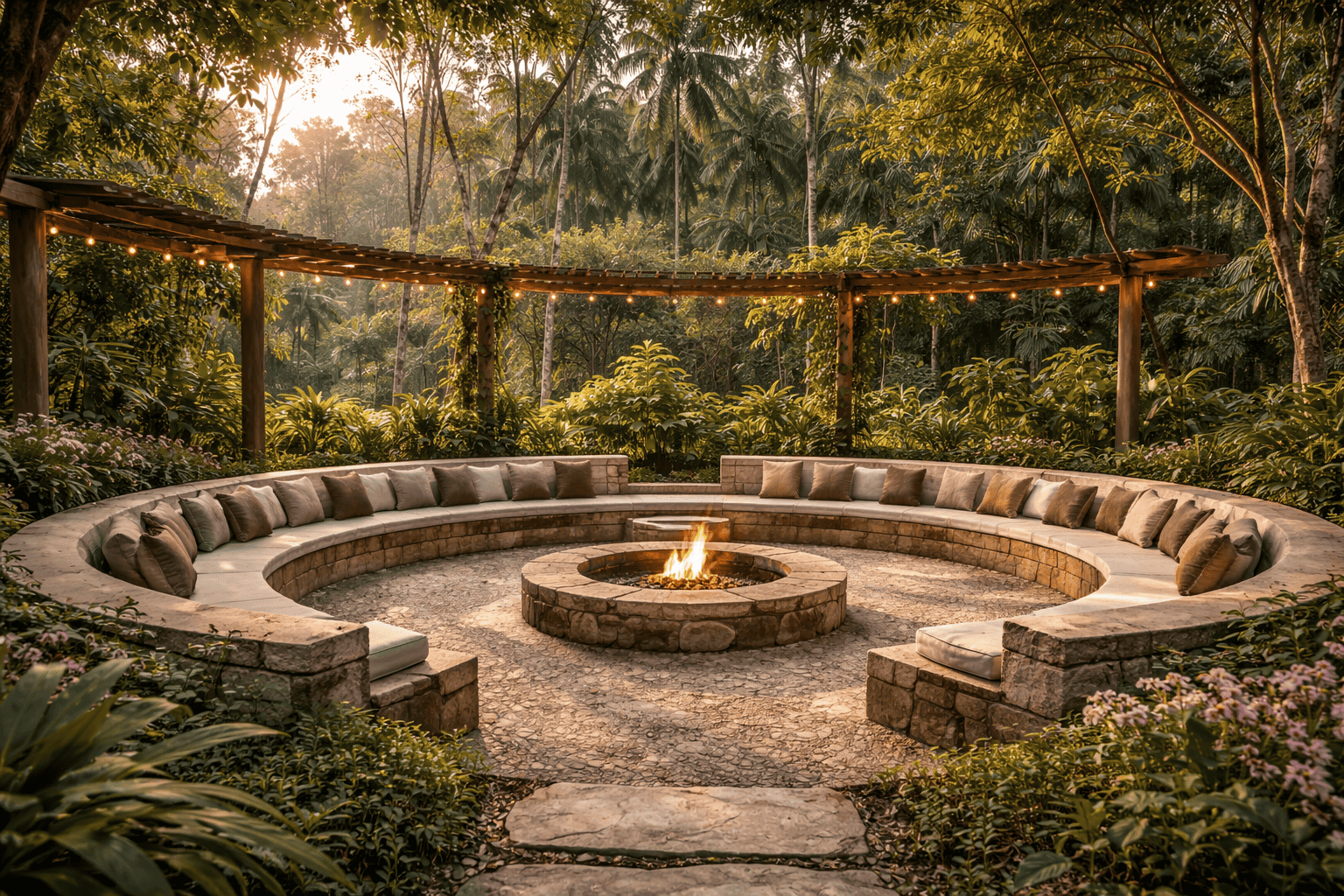
Most people who feel drawn to this kind of life imagine the beautiful moments — the Eid feast, the harvest day, the long table at sunset. Those moments are real. But they are not the whole picture, and they are not even the most important part.
What shapes a life in this collective is not the peak moments. It is the texture of ordinary days — the small repeated encounters, the rhythms that form without being designed, the gradual deepening of knowing and being known. Here is what that actually looks like.
One thing worth saying plainly before we go further: this community does not yet exist as a place. What follows is not memory — it is intention, written in detail because vague visions attract the wrong people and specific ones attract the right ones.
Intentional communities like this do exist around the world. We have studied them carefully, spoken with people who live in them, and listened honestly to what surprised them — what took longer to adjust to than expected, what became natural only after months, not days. Some of what follows draws on those conversations. We are honest about that because the people we are looking for deserve honesty more than they need reassurance.
The adhan at fajr is not an alarm. It is the day's first invitation — to something that has nothing to do with productivity and everything to do with orientation. The masjid is a few minutes' walk. You pray before the mist has lifted from the canopy. The morning belongs to you before the world begins asking things of you.
| Fajr | The masjid. The cool air. The day beginning before it has any urgency. Someone has already swept the path. |
| Morning | Breakfast from what the land produced. Coffee that grew fifty metres away. Conversation that unfolds slowly because no one is rushing anywhere. |
| Work | Three to five hours — at the co-working barn, at home, in the field if the season calls. The rest of the day returned to you. |
| Afternoon | Children between houses. Long walks. Unplanned encounters that last an hour. |
| Evening | A long table. Whatever was harvested. Conversation that needs no agenda. |
| Isha | The last call. The night is quiet in a way that cities have forgotten. |
After breakfast, some head toward the nursery beds while others open laptops in the co-work barn. Children drift toward the Learning Centre. The Farm Manager meets local staff near the tool shed. An elderly couple walks the forest paths before the heat rises. By evening, the long table gathers people whose days looked entirely different — but still belonged to the same place.
People who live this way often say the same thing: the first weeks, 5:30am feels early. Then one morning it doesn't anymore.
Your plot — approximately 15,000 sq ft, privately titled — is yours. Your home is yours. Your family's rhythms, your private mornings, your choices about how you spend your evenings. These belong to you entirely. What is shared is explicit: the masjid, the farm, the Learning Centre, the governance, the common land. The line between private and shared is clear, respected, and written into the covenant. Intentional does not mean boundaryless.
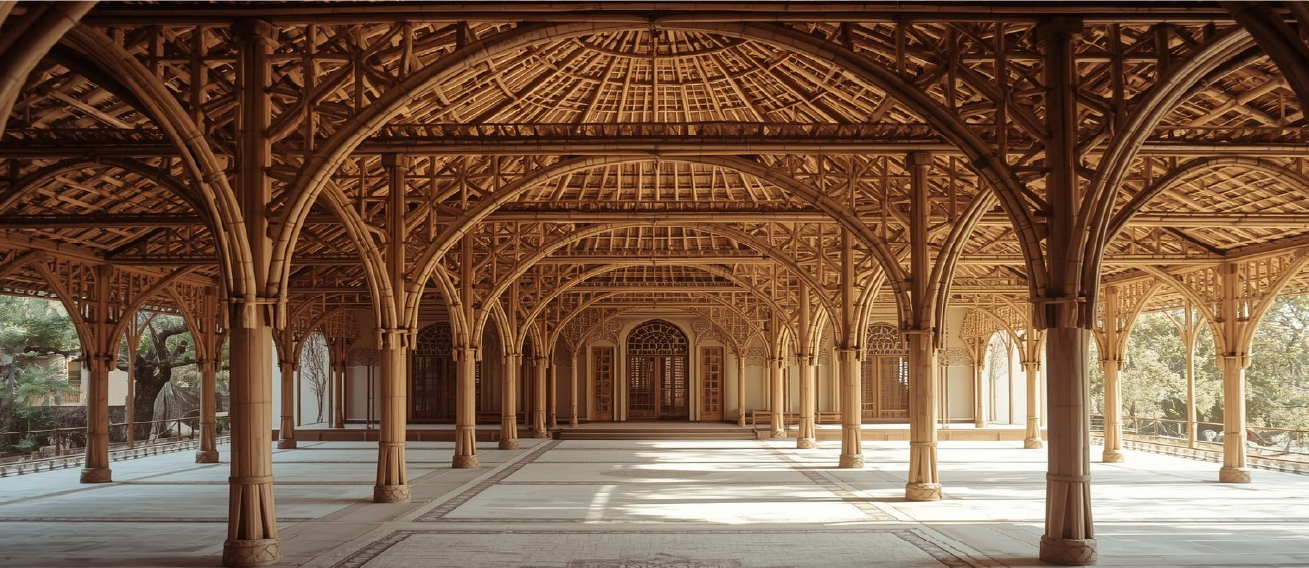
The masjid, the gathering hall, the farm paths, the co-working barn, the food forest trails. These spaces are not amenities — they are infrastructure. Built so that people cross paths rather than avoid each other. Built so that community happens as a matter of daily life rather than requiring constant planning or a calendar invitation. You do not have to plan to be social here. The design does that for you.
Some people here are deeply woven in — at every governance meeting, every planting weekend, every shared meal. Others prefer more solitude — they pray in the masjid, walk the trails, tend their own plot, and engage when they choose to. Both are welcome. Most people find their rhythm somewhere in the middle. The community does not demand a particular level of involvement. The covenant asks for genuine commitment to the values — it does not prescribe how many dinners you attend.
Many people carry an anxiety about intentional community — that it will feel relentless, socially demanding, or impossible to step away from. In practice, most families quickly find their own rhythm: how much they share, how much they keep private, when they join the long table and when they stay home. That rhythm differs for everyone, and that is entirely fine.
What people who already live this way consistently report is that this settling-in period rarely looks as smooth as they imagined going in. That is not a warning. It is just honest — and knowing it in advance makes it easier to move through.
Children move between houses without knocking — because they know every door and every name. The older ones watch the younger ones. The younger ones follow the older ones into the food forest and learn the names of things their parents cannot identify. Post-work hours become genuinely unstructured again. Conversations start because two people happen to be walking the same path at the same time. No one planned it. That is the point.
For parents who grew up watching their children closely, this is one of the bigger adjustments. The village watches them. That trust is built over months, not assumed from day one — and building it is part of what makes the freedom real.
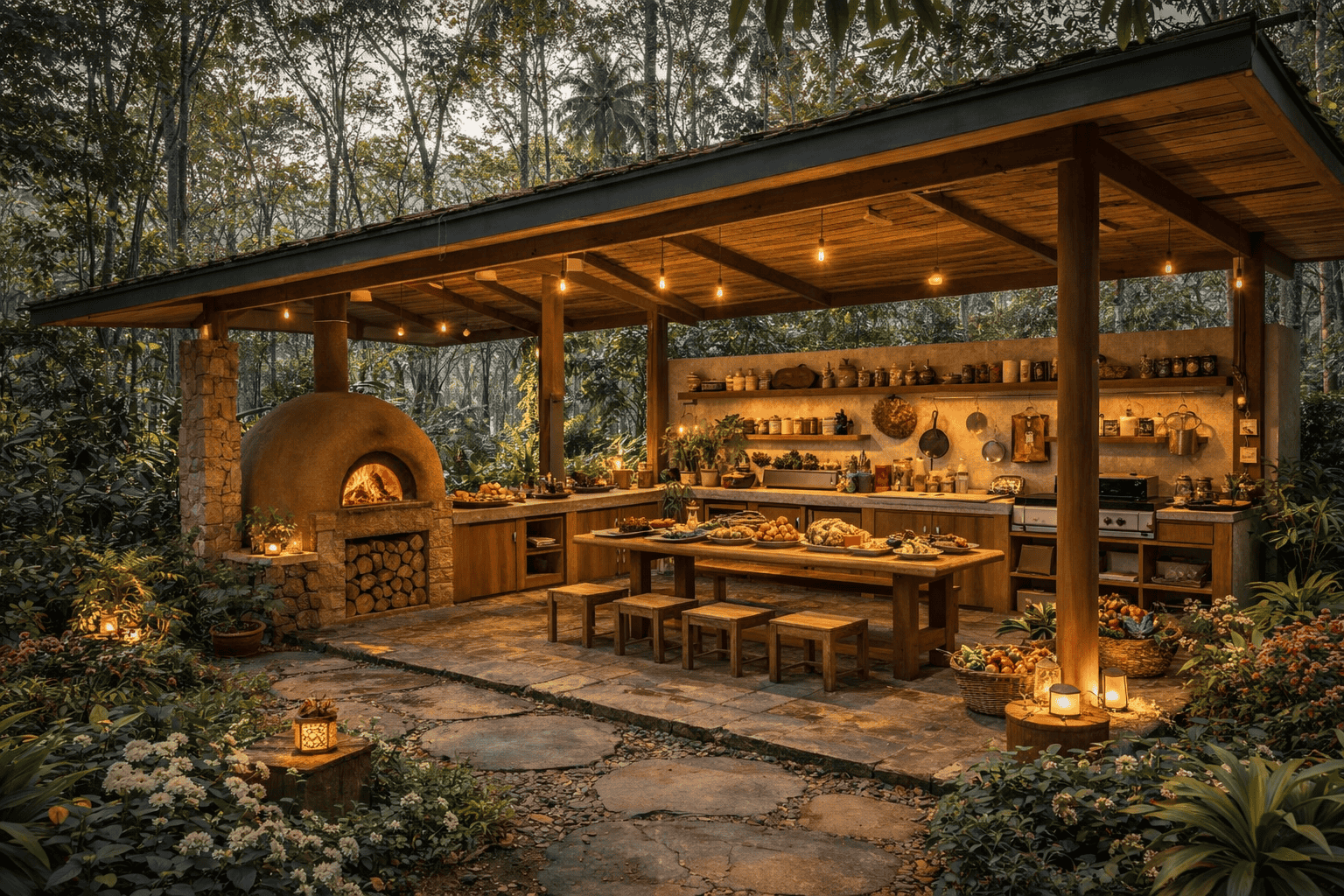
A neighbour who knows calligraphy teaches on Thursday evenings. Another who trained as a midwife becomes the community's first point of call for mothers. The builder who knows natural construction shares what she knows with anyone who wants to learn. This is not a transactional culture. It is the natural texture of living among people who have different skills and a genuine interest in each other. Whatever you bring, it becomes part of what this community is.
The celebration is shared by everyone in the community. The table is long enough. The food comes from this land. The children run between houses because they know them all. The prayer is in the masjid that is a few minutes' walk. There is no logistics, no driving, no coordinating who is hosting. The community is the host. This is what Eid can feel like when celebration is woven into daily life rather than organised around logistics.
The calendar here is set by seasons and salah, not by notifications. The wet season brings a different pace from the dry season. The harvest weeks are full and physical and communal. The quiet weeks between them are genuinely quiet — not the hollow busyness that passes for rest in a city, but actual spaciousness. The rhythm is not imposed. It emerges from the land and the faith, which is where rhythm belongs.
The rhythm extends to how you shop. There is no two-day delivery here. What is available locally shapes what you cook, what you use, what you learn to do without — and most people find that surprising freedom rather than deprivation.
The moments that define a life in community are not the ones that photograph well. They are the ones that accumulate quietly: the neighbour who noticed you were struggling and left food at your door without being asked. The child who came home knowing the name of a tree they planted three months ago. The shura that reached a difficult decision and came out stronger for it. The fajr prayer on an ordinary Wednesday when the mist was particularly heavy and the adhan particularly clear. A life made of moments like this is not an escape from reality. It can feel like a fuller version of it.
This community does not yet exist as a finished place. What is described above is the life the Seed Circle is designing toward together — informed by those who have walked this path before us in different parts of the world, and shaped by values that make our path distinct. The Islamic framework, the Muzara'ah farm, the Indonesian land — these are ours. The honest admission that it takes time to feel like home — that we borrow from those who already know.
If this life feels like something you have been trying to name — the conversation starts with a message.
Message us on WhatsApp Register your roots