The most common question from people who are genuinely interested but hesitant: "Can I wait until you have land? Until there is something more concrete?"
It is a reasonable instinct. We are trained to evaluate things that exist. But this instinct misunderstands what you are actually being asked to join.
You are not buying a product
When you join a property development, you are evaluating a finished thing. The decisions have been made. Your choice is binary: whether it fits you or it doesn't.
This is not that. This is a community forming itself before it finds its land — deliberately, because the strongest communities are often shaped this way. You are not evaluating a finished product. You are being invited to be one of the people who shapes what gets built.
The land will reflect who we are. If we choose the land before we know who we are, the land becomes the project — and the community becomes the afterthought.
What founding members actually shape
If you join the Seed Circle now, you are part of the group that decides what we look for in land, how decisions are made, what the covenant says, who else joins, and the character of the collective. That intangible quality — the emotional and cultural texture of the place — is set in the founding period and is very difficult to change later.
What you are not committing to
The $1,000 token secures your Seed Circle place and locks your pricing. It is not a land purchase. If the Seed Circle doesn't reach its minimum of 12 families, every token is returned in full. If you need to exit before land is purchased, your token is refunded minus a proportional share of documented research costs.
You are not committing to a specific parcel of land. You are committing to a process of finding the right land, with the right people, in the right way.
The founding period — and what it shapes
Once the land is identified, the Seed Circle closes. Once the land is identified, many foundational decisions will already have been made. People who join later are joining something that already exists — valuable, but different from being one of the people who made it what it is.
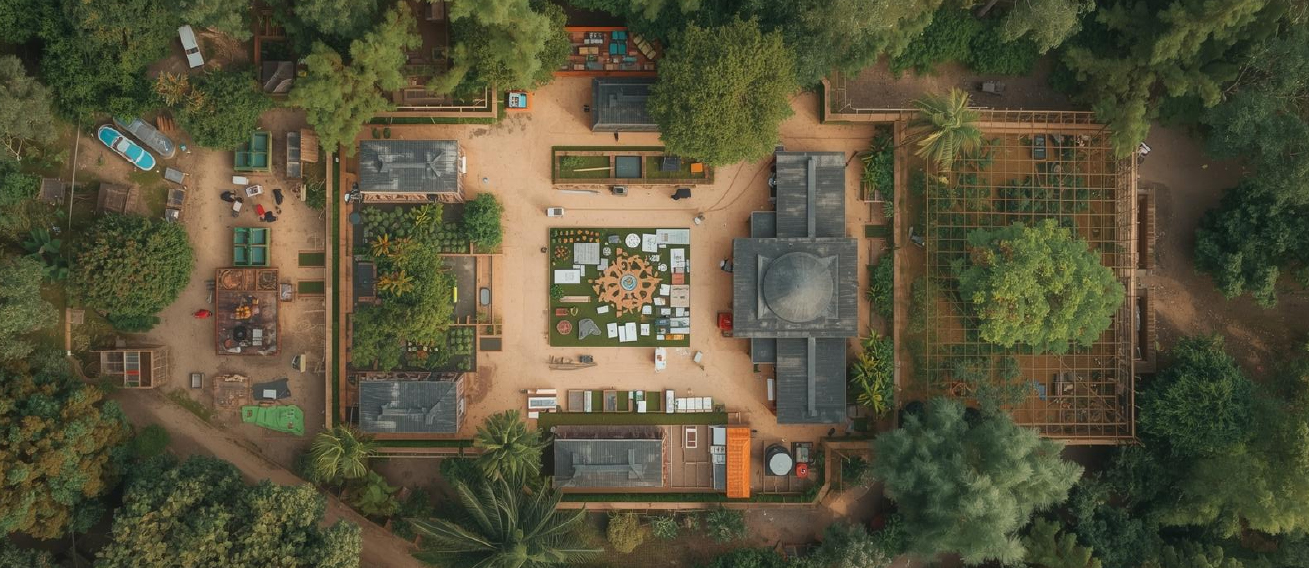
There is a particular satisfaction in founding something. In knowing that the masjid was placed where it is because you were in that conversation. That the protected ecosystems cover 50% of the land because you helped write the covenant that made it so. (These proportions are illustrative and will be shaped by the land the Seed Circle selects.)
A honest note on founding periods
Founding periods are rarely neat. There will be uncertainty, changing ideas, difficult conversations, and decisions that take time to arrive at. Some things will shift from what was originally imagined. Not everything will be resolved before the next thing needs deciding.
But communities capable of lasting are usually shaped through exactly those processes — together. The friction of early decisions, worked through honestly, builds something that smooth and frictionless launches rarely do. If that kind of process sounds like something you can engage with rather than something you need to wait out, that is worth paying attention to.
There is something else worth naming. What the founding members build here does not stay here. A collective that works — that genuinely feeds its members, educates its children, governs itself with integrity, and grows more abundant over time — becomes proof that this way of living is possible. It becomes a model. An incubator for the communities that will come after it, built by people who learned what works by doing it first.
The families who join now are not just building a home. They are building the evidence that a different way of living is real.
Which uncertainty feels worth living into? The uncertainty of building something together — or the certainty of joining something someone else built?
The people who resonate with this path usually find they already have an honest answer to that question.