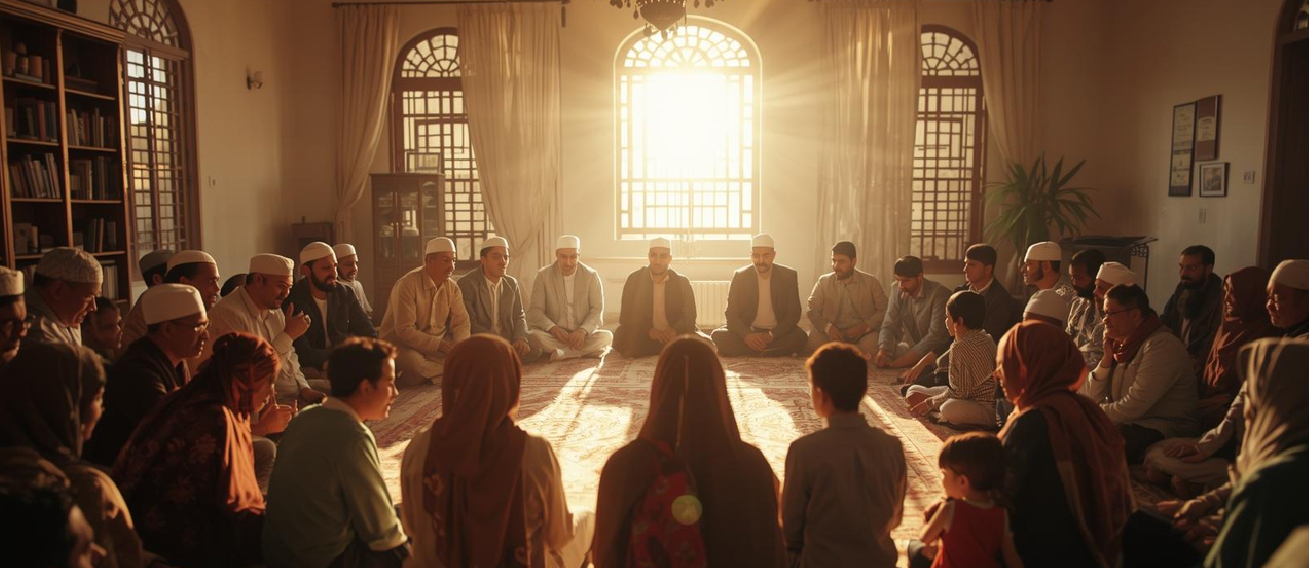
In a conventional neighbourhood, the people around you are there by coincidence — of timing, of price, of availability. You share a postcode. You might share a street. You rarely share much else.
In an intentional community, none of the people around you are there by accident. Every family went through the same conversation, made the same commitment, signed the same covenant. You chose to build life alongside one another — and more importantly, you chose shared commitments about how to live before you chose a location.
What does that actually mean in practice? Six things, described honestly.
Not by accident. Not by postcode. Not by whatever happened to be for sale when you were ready to buy. You choose to live alongside people who share your values — the adhan as the rhythm of the day, the halal table as the default, the jamaah as the social fabric. This is not a preference. It is the architecture of the place. The people around you will share not just an aesthetic but a foundation.
Every decision about how the community grows starts with the ecosystem. Half the land is protected by covenant — protected from development and major clearing through the covenant. The wilderness zone is not a marketing feature. It is a legal commitment made by every member before they receive their plot. The community is built into the landscape, not imposed on it. Regeneration over extraction. The land is not a resource to be consumed. It is a trust to be kept.
Intentional does not mean communal in every direction. Your plot — approximately 15,000 sq ft, privately titled in your name — is yours. Your home is yours. Your family's rhythms, your private mornings, your choices about how you spend your evenings — these belong to you. What is shared is explicit: the masjid, the farm, the Learning Centre, the governance, the common land. The boundary between shared and private is clear, respected, and written into the founding agreement.
They walk to the Learning Centre with neighbours. They learn from different adults — the permaculturist, the builder, the doctor, the cook. They are watched over by older children. They grow up knowing the adhan before they know what an alarm clock is, knowing where food comes from before they understand supply chains, knowing the names of fifty trees before they need to know the names of fifty brands. Community is not something they will spend their lives searching for. It is the water they swim in from the beginning.
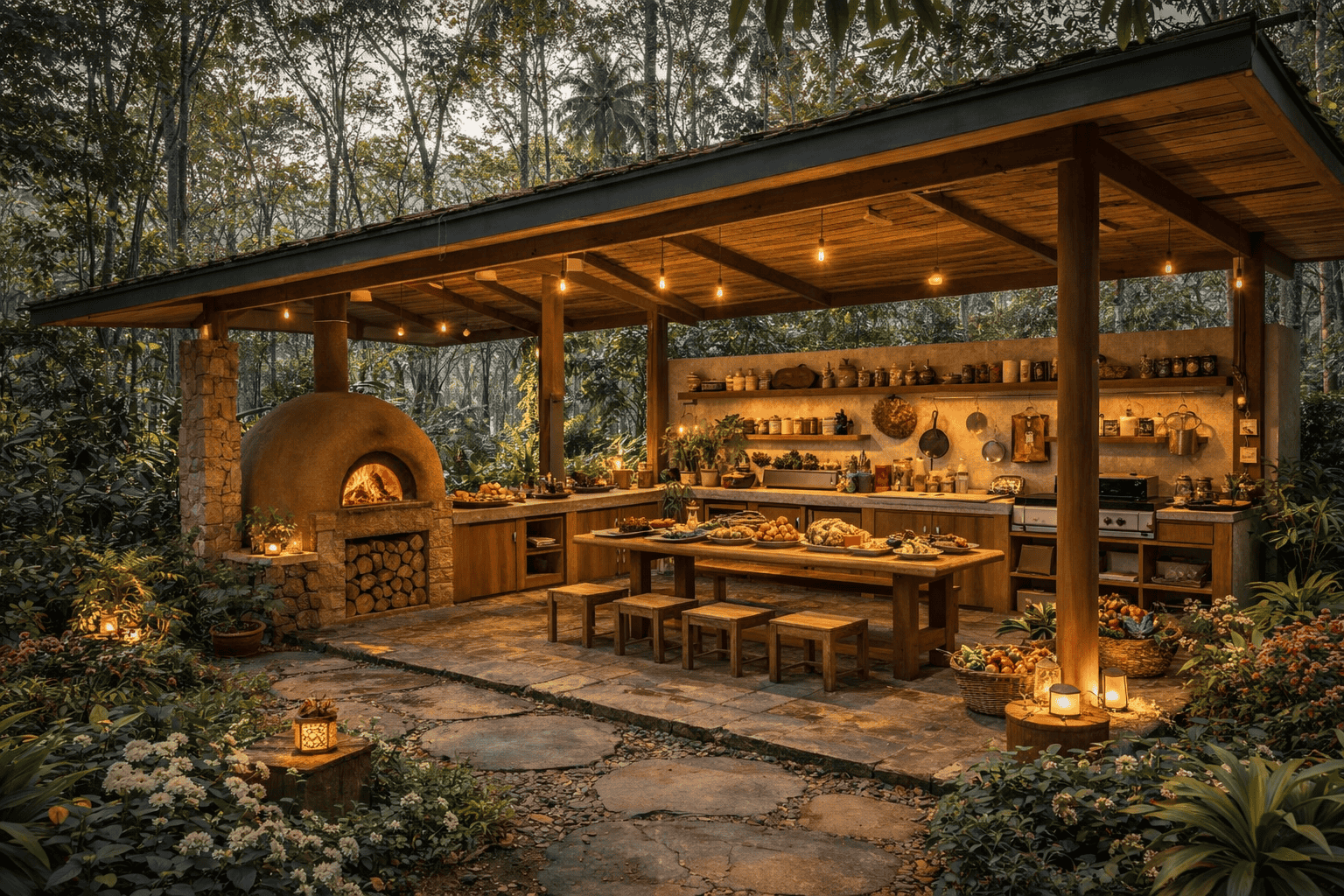
The masjid a few minutes' walk from every home. The gathering hall where the long table is set every evening. The farm paths that take you through the food forest. The co-working barn where screens go down at maghrib. These spaces are not amenities. They are infrastructure — built so that people cross paths rather than avoid each other, so that community happens as a matter of daily life rather than requiring special effort.
For the shura when the conversation is difficult. For the harvest when the season asks more than expected. For the neighbour whose month has been hard. For the governance decision you would have chosen differently but can live with. Not because the covenant requires it — though it does. Because you chose this. Because belonging is not a state you arrive at. It is something you practise, repeatedly, in the ordinary moments that no one photographs.
Showing up does not mean every person does every task. A community works through differentiated contribution — residents, teachers, builders, growers, stewards, and local workers, each present in their own way. The goal is not uniformity of role. It is shared investment in the same place.
Intentional community is not the absence of difficulty. It is the choice to work through difficulty with people you have committed to — rather than around it with strangers you can avoid.
This community does not yet exist as a place. The land has not been identified. The masjid has not been built. The long table has not been set. What exists is the Seed Circle — the founding families whose conversations, commitments, and covenant will determine what kind of place this becomes. If these six things resonate with the life you want to live, that is where the community currently is. In its conversations. The shape of the community will emerge through the people who choose to participate in it.