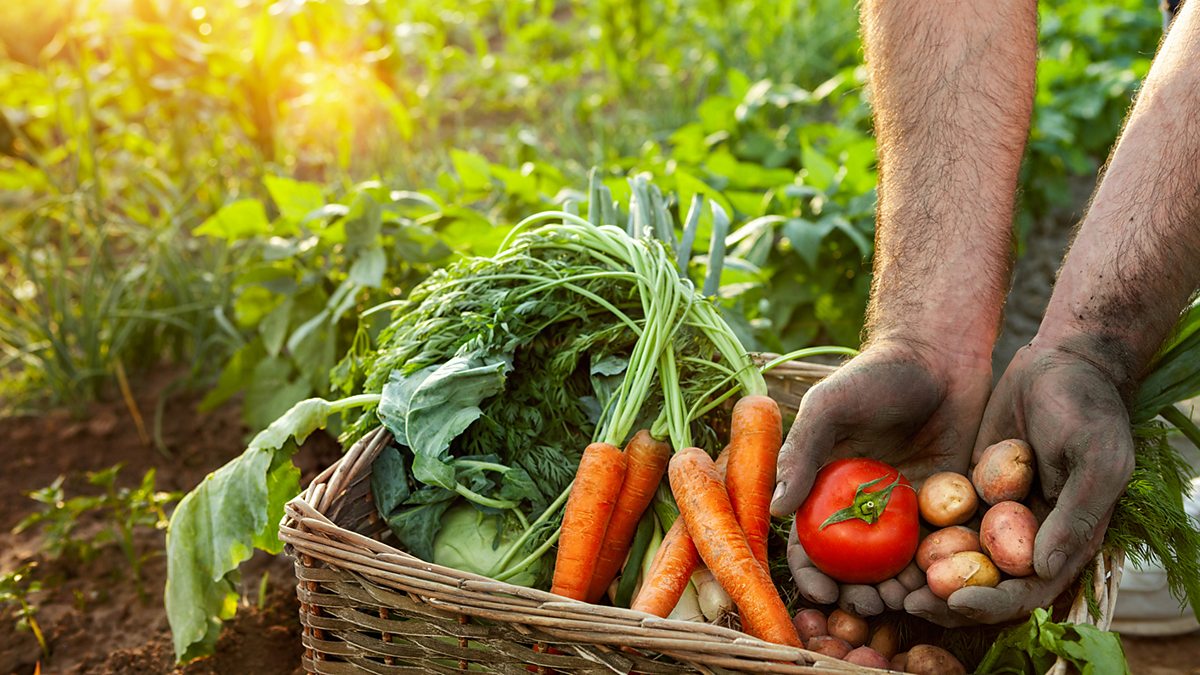
Every farming collective eventually faces the same tension: who does the work, and who benefits? The conventional answers — hire employees, bring in contractors, ask members to volunteer — each carry hidden costs. Employees have no stake in the harvest. Contractors have no connection to the land. Volunteers are enthusiastic at planting and scarce at weeding.
The Muzara'ah contract resolves this tension at the root. Rather than separating ownership from responsibility, it aligns them. It reframes the entire relationship between the land, the labour, and the people who eat from both.
What Muzara'ah means
Muzara'ah is a classical Islamic contract for sharecropping. Its structure is simple: one party provides the land and the inputs — the soil, the infrastructure, the seeds and tools. The other party provides the labour and the expertise — the knowledge of when to plant, how to tend, when to harvest. Both parties share the yield proportionally, agreed in advance. Both parties also share the risk: if the harvest fails, neither profits.
It is not an employment contract. It is not a lease. It is a partnership — between those who hold the land and those who work it — where the terms are transparent, the reward is proportional, and the structure is designed to prevent one party benefiting unfairly at the expense of the other.
The harvest is then shared proportionally according to the terms established in advance — before the first seed is sown.
Why it matters
The conventional farming arrangement places all the risk on one party and all the reward on another. An employee farms the land regardless of whether the harvest is good or poor — their wage is fixed, their stake is zero. A landowner receives rent whether the land is well-tended or neglected. Neither arrangement gives both parties a genuine reason to care about the same outcome.
Muzara'ah changes this. When the Farm Manager's livelihood depends on the same harvest that feeds the community, their interests and the community's interests are identical. A poor harvest is carried collectively. A strong harvest benefits everyone proportionally. A good harvest rewards everyone proportionally. The structure reduces the hidden tensions that often exist between the person who works the land and the people who eat from it.
The best farming relationship is one where the farmer and the family eating from the farm want exactly the same thing from the same piece of land.
The spiritual roots
Muzara'ah is not a modern innovation dressed in classical language. It has roots in prophetic practice and has been discussed by scholars across the four major Sunni schools of jurisprudence for over a thousand years. The conditions that make it valid — transparency of terms, proportional sharing, shared risk — are the same conditions that make it ethically sound by any measure.
Choosing Muzara'ah for the collective's farm is not a nostalgic gesture. It is the recognition that the tradition developed this model because it works — not just economically, but justly. And in a community built around a specific set of values, how the food is grown matters as much as what is grown.
What this means for members
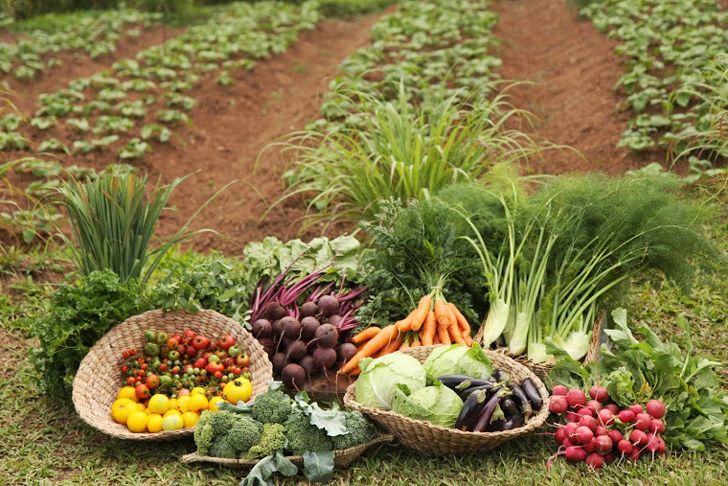
You do not have to farm. The Farm Manager handles daily operations. The collective provides the infrastructure. Members share proportionally in what the land produces.
But you are not passive about the land either. The harvest days, the planting weekends, the morning walk through the food forest — these are available to every member who wants them. Children learn where food comes from not through explanation but through participation. The relationship between effort and abundance becomes visible in a way that no supply chain can replicate.
- Farm yields are distributed among members according to their proportional share of the collective
- The Farm Manager receives their agreed share — their livelihood from the land they steward
- If the harvest is poor, that reality is shared transparently by everyone involved
- If the harvest is abundant, both parties benefit proportionally
- All terms are written, transparent, and agreed before the first seed is sown
Halal and tayyib
The food produced on the collective farm will be halal — permissible — by design. But the Muzara'ah model pushes further toward tayyib: wholesome, good, produced with integrity. Tayyib is not just about what is absent from the food (prohibited substances, haram practices). It is about what is present: care, fairness, honest work, and a relationship between grower and eater that both parties can stand behind.
Food grown under a Muzara'ah contract by a Farm Manager who has a genuine stake in the outcome, on land that is being actively regenerated, within a community that knows where every vegetable came from — that moves closer to tayyib in the fullest sense of the word.
The farm does not yet exist. The Farm Manager has not yet been appointed. The first seed has not been sown. What the Seed Circle is doing now — forming the community, writing the covenant, identifying the land — is what makes all of this possible. The Muzara'ah model is the framework we are building toward. The people who join now are the ones who will choose how it is implemented.