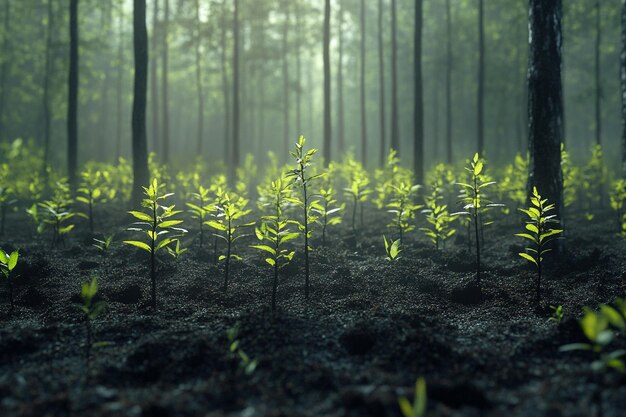
This hadith is not an incidental reference. Every tree planted, every food forest tended, every seed that feeds a bird or a neighbour — all of it becomes an act of ongoing charity. Not a transaction. A gift that continues giving long after the hand that planted it has rested. The model we are describing here is a framework for making this possible — at a scale and with a continuity and resilience that would be difficult for a single family to sustain alone.
Start here — what is a collective?
Forget the word for a moment. The idea is this: a group of people come together around a shared purpose and a shared piece of land. Not neighbours by coincidence — by proximity and nothing else. Not investors in a product someone else built. People who choose each other, agree on how they want to live together, and decide what they want to hold in common and what they want to keep private.
What they hold in common: the land, the food systems, the governance, the shared spaces. What they keep private: their home, their income, their family's daily rhythms. The line between the two is explicit, agreed before anyone commits, and written into a founding document they create together.
That is what a collective is. A group of committed people building something together that none of them could build alone — while keeping the things that matter most to each family entirely their own.
Not every member will farm professionally, design water systems, or build with earth by hand. The collective combines residents, skilled stewards, local workers, and specialist practitioners — each contributing differently to the life of the community. Some members may focus on governance, education, hospitality, business, or raising families while others steward land, food systems, and infrastructure. Participation is shared. Roles are diverse.
A collective is not a commune. Not a resort development. Not a product someone else manages for you. It is something simpler and older — people choosing what to hold in common, and what to keep private, in a way that makes both better.
Why does the model exist?
Because the alternatives don't deliver what most people actually want. Instead of one family trying to do everything alone, twenty families share the responsibility — and the reward.
- Buying land alone gives you responsibility without community. The food forest requires knowledge you don't have. The deeper communal life — the jamaah, the shared table — rarely materialises.
- A managed farmhouse gives you aesthetics without substance. Someone else runs it. You visit on weekends. A second address, not a second life.
- The collective shares infrastructure costs across families — making 100+ acres viable where a single plot is not.
Consider what this means in practice. One irrigation system designed and maintained collectively. One tool shed stocked and shared. One nursery producing seedlings for every plot. One compost system feeding the entire food forest. One co-working barn. One masjid. One gathering hall. None of these require twenty separate budgets. They require one shared commitment.
- Knowledge and skills are pooled — the builder, the educator, the permaculturist, the lawyer all become community assets
- The community is present from day one — not something you hope will arrive later
- The resilience of twenty families is far greater than the resilience of one
Why forest-friendly?
Most development clears land and imposes infrastructure. A forest-friendly collective does the opposite — the existing ecology is the foundation, not the obstacle.
- Existing trees and ecosystems are preserved, not cleared
- Degraded land is reforested — the food forest grows in layers alongside the existing canopy
- Water systems are designed around natural flows, not imposed over them
- Buildings use materials from the land — earth, bamboo, timber, stone
- Wildlife corridors and biodiversity are actively protected
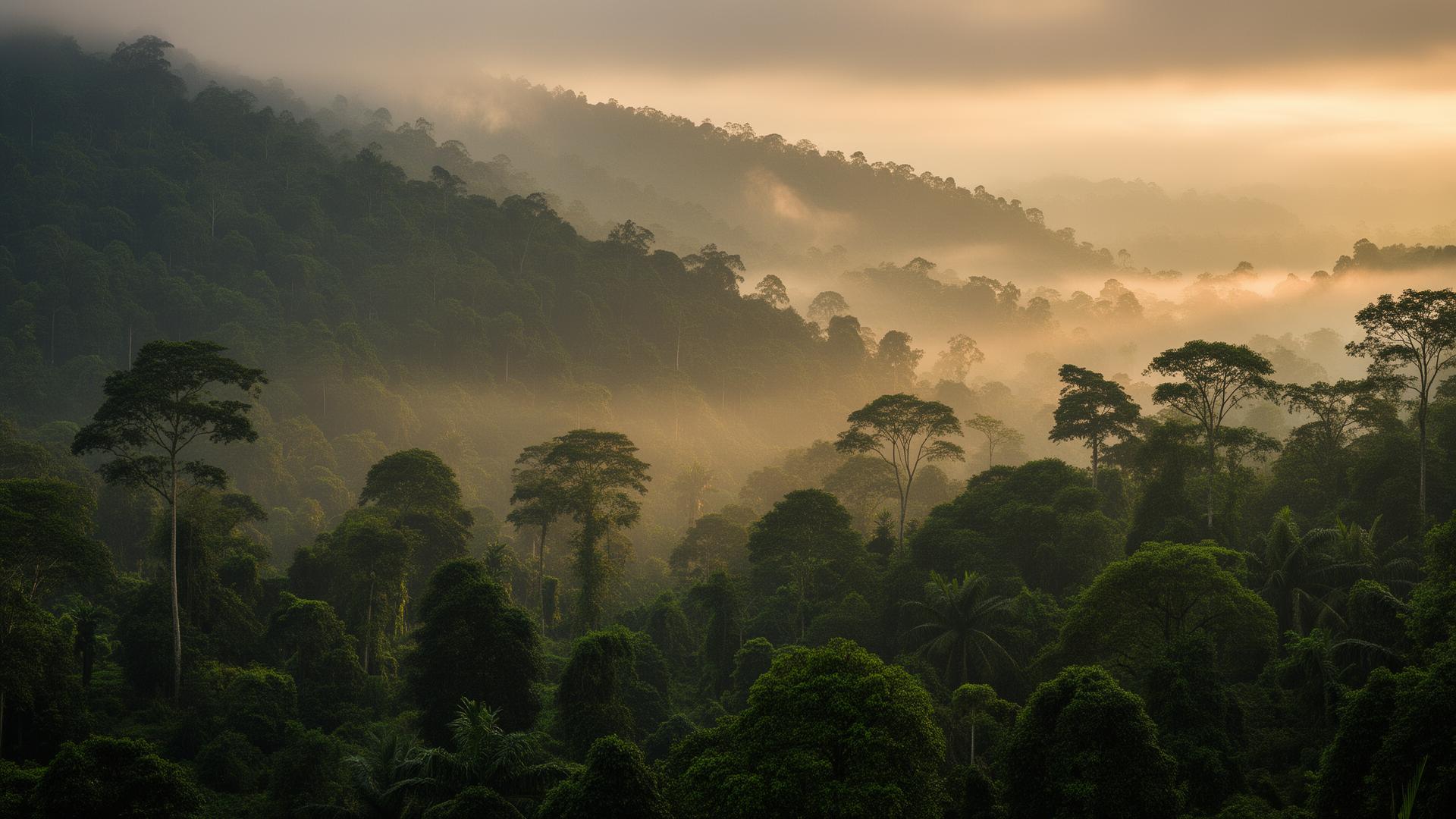
In Indonesia, where the biodiversity is extraordinary and the volcanic soil among the most fertile on earth, this approach is not idealism. It is one of the most sensible ways to work with what is already there. The healthier the ecosystem, the healthier the community within it.
How it works in practice
Shared governance takes patience. The covenant matters because people are imperfect, not despite it. Not every disagreement will resolve quickly. Some decisions will take longer than expected. People will change their minds, and the community will evolve in ways the founding members cannot fully predict. This is not a flaw in the model — it is the nature of building something real with real people. The covenant exists precisely to hold the community through those moments rather than around them.
The land is held collectively — typically 100 or more acres, divided into three zones, each with a clear purpose and a covenant that protects it permanently.
Protected from development and large-scale clearing by covenant. Existing ecosystems preserved in perpetuity. Wildlife corridors, water catchment, ecological restoration.
The food forest, the farm, the water systems. Managed ethically — shared labour, shared risk, shared harvest. The land feeding the community that tends it.
The masjid, the learning centre, the gathering spaces. And within this zone, each family's privately titled plot — their home, their land, entirely their own.
These proportions are illustrative rather than fixed. The exact balance will be shaped by the ecological realities of the land the Seed Circle selects.
Protect what is valuable.
Restore what is degraded.
Build only where it strengthens the long-term health of both people and place.
- Major decisions are approached through shura and consent-building rather than adversarial voting
- Five stewardships handle day-to-day responsibility across land, building, food, finance, and education
- The covenant — written by founding members before any plot is assigned — defines how the community lives, decides, and grows
The Natural Living Collective is applying this model in Indonesia — beginning with the people, before the land. Twenty founding families are coming together now as the Seed Circle. They will define the land criteria, write the covenant, and choose the site together before any money changes hands for land.
The masjid will be the first permanent structure on the land. The farm will run under the Muzara'ah model — where the collective provides land and infrastructure, the Farm Manager provides skill and labour, and both share the harvest proportionally. Every family holds a privately titled plot of approximately 15,000 sq ft. Everything outside that plot — the farm, the wilderness, the shared spaces — is held and governed together.
The community is not a feature of the land. It is the land's purpose.
The collective is in its founding phase. The land has not been identified. The covenant is being shaped. The Seed Circle is forming. If this model resonates — and you want to be one of the people who decides how it works in practice — the founding conversations are beginning now.