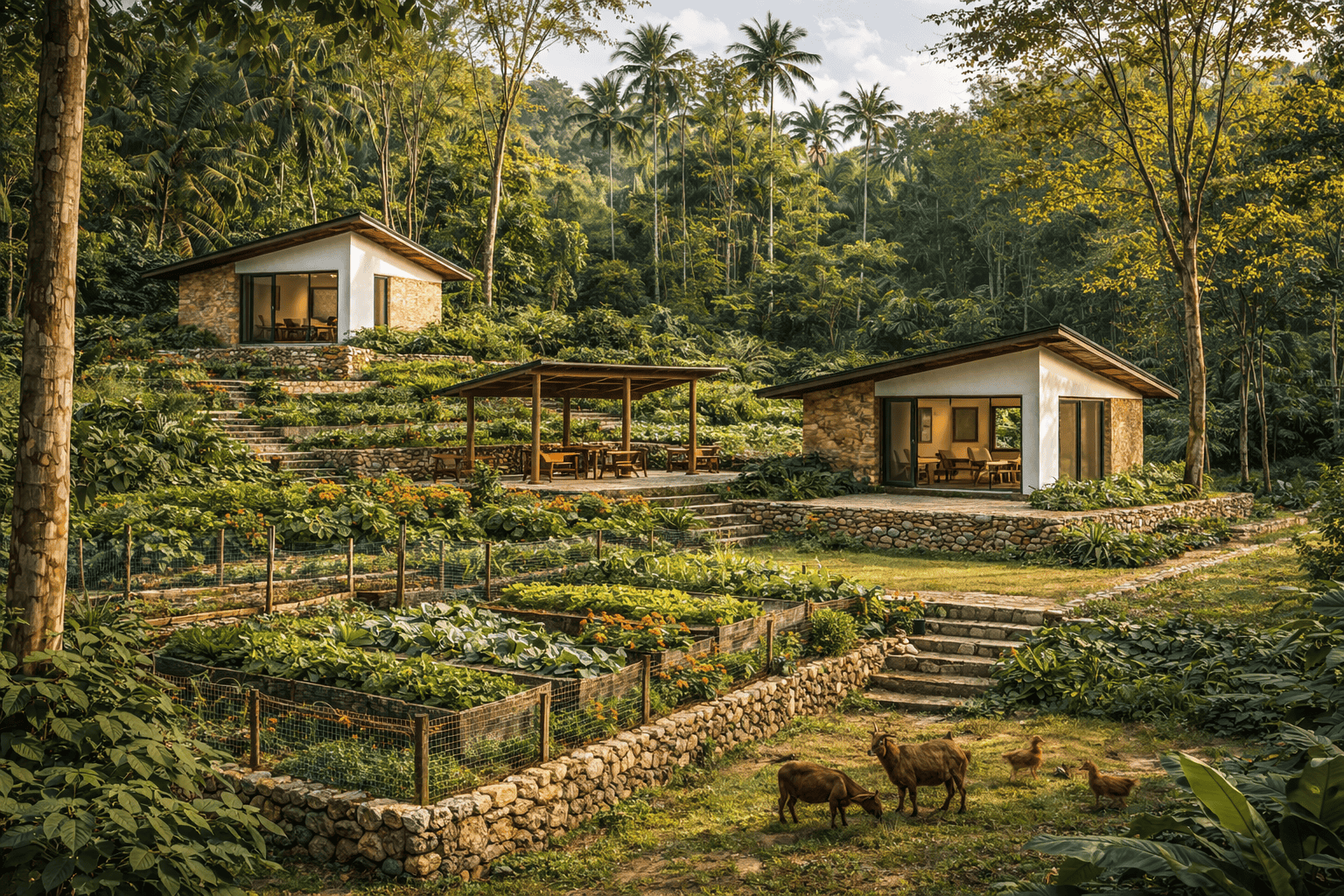
This path is not a developer's project timeline. There is no central authority moving pieces while members wait. Every step from here to the first harvest is walked by the community together — some steps require collective decision, some require individual commitment, all require trust in the people building alongside you.
What follows is the sequence as we intend it, with honest notes on what each step involves and approximately how long it takes. Timelines are indicative. Land, law, and community all move at their own pace.
This is where we are. Founding families commit with a $1,000 token — securing their place, locking their seed pricing, and joining the founding conversations. Every member has equal voice from day one. No tiers, no hierarchy, no observer status.
The Seed Circle is not waiting to be assembled before work begins. It is the work. Land criteria are being discussed. The shape of the covenant is being debated. The culture of the future community is already being shaped through every conversation. The minimum is 12 families before any funds are spent or any land commitment is made. The maximum is 20 families, after which the Seed Circle closes and a waitlist opens.
While the Seed Circle is forming, early research into potential sites runs in parallel. This is not a commitment to a location — no land is shortlisted, and nothing is presented to the community until the founding membership is in place. The research informs the criteria; the criteria come from the Seed Circle.
What the research examines: ecological integrity, water availability, proximity to a city, road access, surrounding land use, existing vegetation, and regenerative potential — the land's ability to heal, mature, and provide over time. Indonesia's highlands offer unusually strong conditions for this kind of vision.
Once the Seed Circle reaches its minimum of 12 families, the first formal collective decision takes place: the land criteria. Not handed down — decided together. Climate preference (elevation, rainfall, temperature range). Distance from the nearest city. Minimum acreage. Ecological requirements. Character of the surrounding landscape.
This conversation produces a written brief that guides the final site selection. Every Seed Circle member has an equal voice in it. The land we find will reflect who we are — which is why this conversation matters more than presentation materials or marketing language.
Based on the criteria set by the Seed Circle, candidate sites are identified and assessed. Two to four sites are presented to the full Seed Circle with detailed reports: satellite mapping, water analysis, soil assessment, access routes, surrounding community, existing vegetation, and ecological potential.
The Seed Circle then votes — by consent, not majority — on which site to pursue. Consent does not mean every member's first preference. It means no member believes the decision would materially harm the community. If no site achieves consent, the search continues. The community does not settle for a location it cannot fully commit to.
Once a site is chosen, a top-tier Indonesian law firm is engaged for full due diligence: title verification, mutation records, land use classification, encumbrance checks, and any restrictions on the parcel. This typically takes two to four months depending on the province and the complexity of the title history.
In parallel, the ownership structure is established. The collective holds shared land through a PT-PMA (foreign investment company structure). Individual plots are held under Hak Pakai — the right of use, renewable, for up to 80 years — or through individual PT-PMA shareholding. Every document is prepared in Indonesian and English, with certified translations available in Arabic on request. No member is expected to sign documents they cannot properly understand.
The token funds held since the Seed Circle formed have been dedicated to exactly this — legal research, law firm engagement, and due diligence costs. Financial reporting is shared transparently with all members throughout the process.
Once the land clears due diligence and the legal structure is confirmed, two things happen simultaneously — and the order matters.
First, the covenant is completed and ratified. This document — which the Seed Circle has been drafting throughout the earlier phases — defines how the community lives, governs itself, admits new members, and resolves disputes. It is completed before a single plot is assigned. It is agreed by all members before money changes hands for land. This is the document that will govern the community for decades.
Second, the 60-day full payment window opens. Seed Circle members pay the balance of their land share. Plot selection follows the order in which full payments clear — the earliest payment receives first plot selection. Members who choose not to proceed within the 60-day window receive their token back minus a proportional share of documented research and legal costs. Their place is offered to the next family on the waitlist at the same seed pricing.
The land is registered through the Indonesian notarial system. PT-PMA registration is completed. Individual Hak Pakai titles are issued. Each member receives their title documentation.
At the same time, the Food Systems stewardship activates the permaculture master plan. This is not a construction plan — it is an ecological design. It begins with water: mapping natural flow patterns, identifying water retention sites, designing swales and retention ponds. Water first, always. The land is read before it is touched.
A comprehensive biodiversity study is conducted: existing vegetation, soil composition, carbon content, groundwater levels, and fauna. The design works with what is already there rather than clearing it. Existing trees are assets, not obstacles.
Earthworks follow the permaculture design — shaping the land to retain water, build soil, and support the food forest canopy. No mono-cropping. No chemical inputs. The soil is treated as the most valuable resource on the land, because it is.
The food forest is planted in layers: canopy trees first (fruit, timber, nitrogen-fixers), then mid-story (coffee, cacao, spices, medicinal herbs), then ground cover and root crops. The food forest takes years to mature — which is why it is planted first. Every year of patience compounds into abundance.
The masjid is the first permanent structure. Not the co-working barn. Not the houses. The masjid. Built from earth, bamboo, timber, and stone. Designed to last generations. Positioned at the centre of everything. The adhan from its minaret will be the first sound the land learns to carry.
Housing clusters follow: built in groups of six to ten homes, each to shared natural building guidelines. The Learning Centre, gathering hall, and co-working barn are built alongside the first housing cluster so that community life is possible from the earliest arrivals.
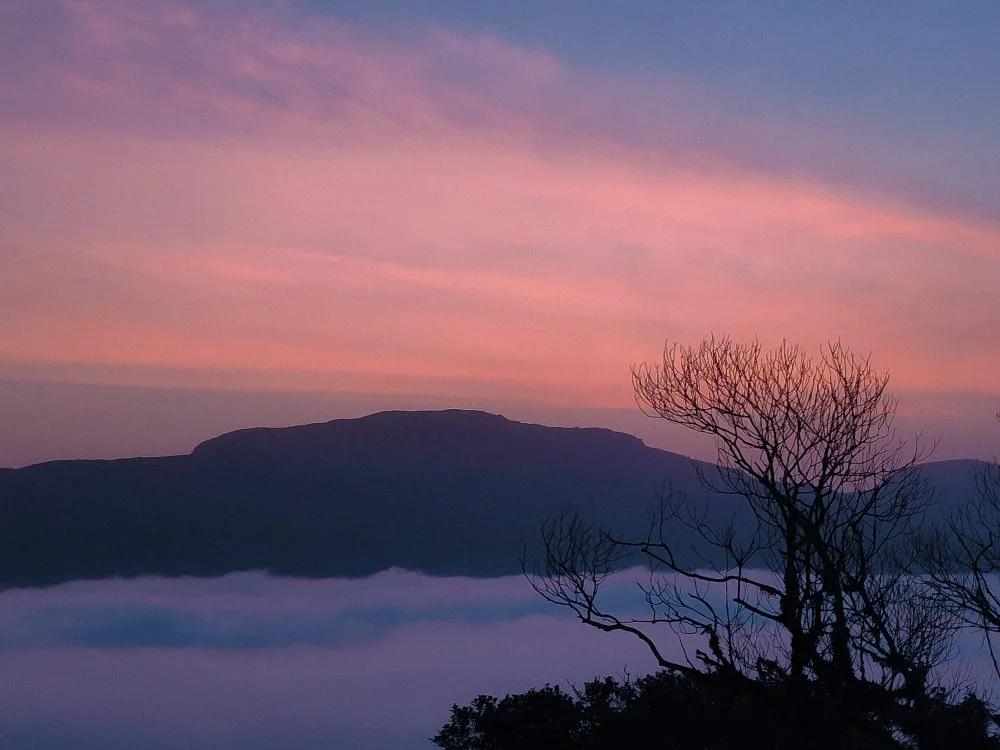
This is not a delivery date. It is a homecoming. Families arrive as their homes are completed — not all at once, but in a living sequence that itself becomes part of the community's founding story. The first family to sleep on the land, the first fajr prayer in the masjid, the first meal from the farm — these are moments that the founding members will carry for the rest of their lives.
Farm operations begin under the Muzara'ah model: the Farm Manager brings skill and daily labour, the collective provides land and infrastructure, both share the harvest proportionally. The food forest is still young — the first yields are modest. But they are real, and they are from this soil, tended by these hands, eaten at this table.
The community is now governing itself: the shura meets, the stewardships are active, the covenant is being lived rather than just agreed to. The wilderness zone is protected, the food forest is growing, the masjid is full five times a day. The land is beginning to give back what was put into it.
The first harvest is not the end of the path. It is the moment the path becomes a life.
The timelines given above are indicative, not contractual. Land acquisition in Indonesia moves at the pace of Indonesian law — thorough, measured, and not to be rushed. Community decision-making by consent takes longer than majority voting, and produces better outcomes. Earthworks depend on the monsoon seasons. Every step above includes margin for reality. What we can commit to is the sequence, the transparency, and the community-led nature of every decision along the way.
Beyond the first harvest
The first harvest is not the finish line. It is simply the moment the community begins receiving back what it has spent years building.
The Seed Circle forms. The covenant is written. The land is identified and secured. Water systems, access paths, and the first plantings begin.
The masjid, Learning Centre, gathering spaces, and homes emerge. The food forest begins producing. Neighbours become friends. Traditions begin to form.
The landscape matures. Trees provide shade. Harvests become more abundant. Children grow up knowing every path, every family, and every season of the land.
The community develops something no master plan can design: memory. Stories. Shared history. People who arrived as founders become elders. The land begins carrying the imprint of the people who cared for it — and the people begin carrying the imprint of the land.
The goal is not to build quickly. The goal is to build something that can still feel alive fifty years from now.