The income question is real. But often, the more useful question is a different one. The more useful question is not how much you need to earn — it is how little you need to earn once the land is doing most of the work.
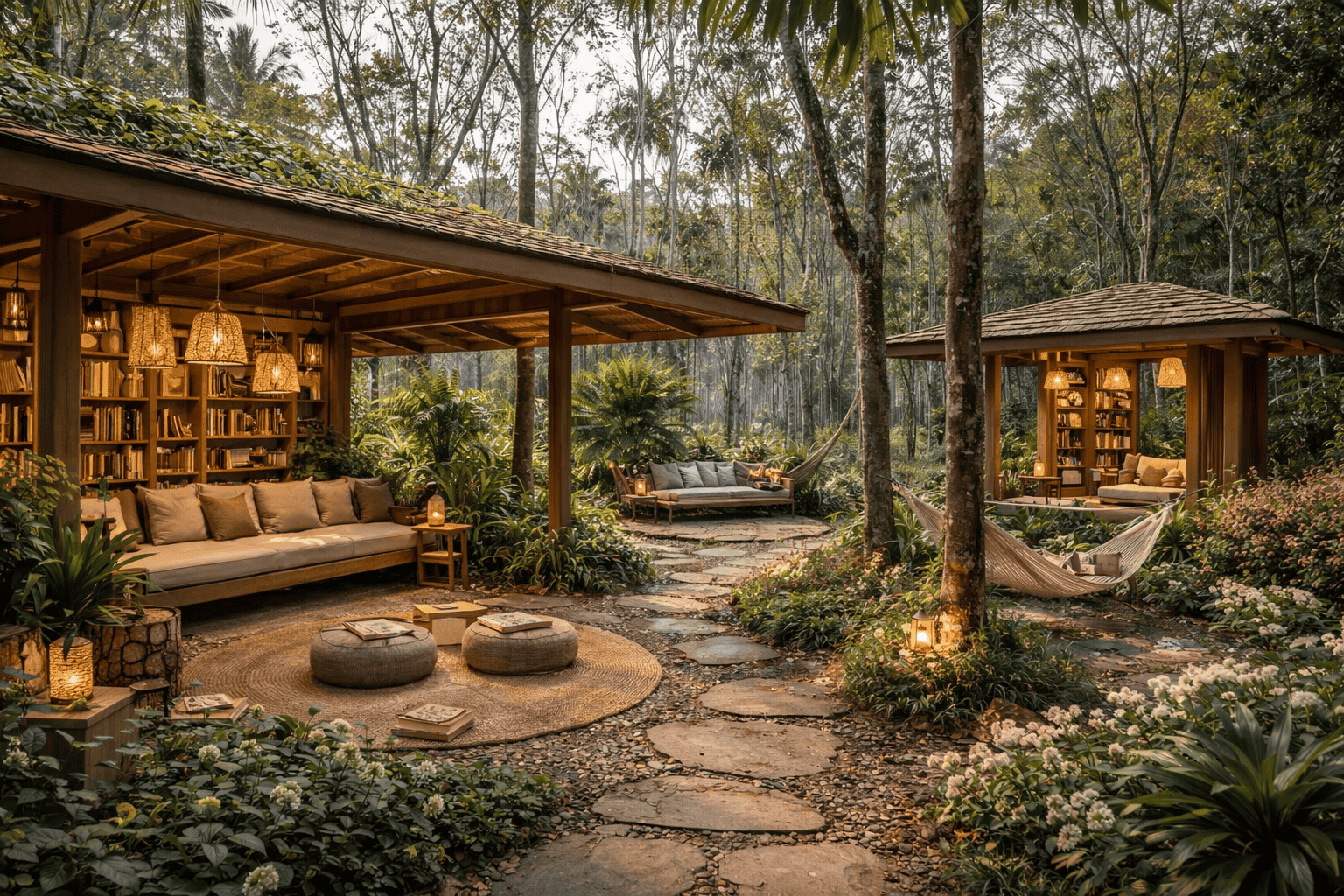
Most conversations about this kind of life skip the money question or answer it vaguely. Here is a real answer — starting with a reframe.
The conventional question is: "How will I replace my city income?" The more useful question is: "How much income do I actually need when the land provides what it is designed to provide?" These are very different questions, and the second often has a far more workable answer.
| Cost | In a city | In the collective |
|---|---|---|
| Housing | Rent or mortgage | Owned. Titled. No rent or mortgage. Ongoing costs become significantly lower and mostly maintenance-based. |
| Food | Weekly shops | A meaningful portion of staples and produce from the farm, food forest, and individual plots. |
| Children's education | School fees | Community-led learning with significantly lower costs than conventional schooling. |
| Social life | Restaurants, activities | Shared meals, gatherings, trails, farms, and spaces already woven into daily life. |
| Transport | Car, insurance, fuel | Reduced. Much of daily life is walkable. |
When housing, food, education, and social spending disappear, the income required to live well becomes a fraction of what you earn now. For many families, the required monthly income may become dramatically lower than in a conventional urban lifestyle.
Carefully vetted guests — those who want to experience this life before committing to it — can stay for defined periods. They eat from the same farm. They participate in the rhythm of the day. They leave either knowing this is not for them, or knowing it is. Either outcome is valuable.
This is not passive income. It is an extension of the community's purpose — and any income it generates flows directly to participating households. The hospitality division exists to serve the community's mission first. Revenue is a consequence, not the goal.
When much of your food comes from the land around you, your home is already built, and your evenings end around a fire with people you genuinely know — the question "do I have enough?" has a very different answer than it did in the city.
We won't promise financial returns. We won't promise the farm generates passive income from year one. The reason to join is the life. The financial model exists to make this way of life viable — not to sell it as an investment strategy.
Modern economies tend to optimise for a single return: financial income. A healthy life often produces several others at the same time — stronger relationships, healthier ecosystems, meaningful work, deeper faith, and a greater sense of belonging. The question is not whether this path produces financial returns. The question is whether financial returns alone are enough.
If the numbers are what's holding you back — let's talk through them specifically. Every family's situation is different, and a real conversation is more useful than any article.
Message us on WhatsApp Register your roots